Moment of Indiana History is a weekly two-minute radio program exploring Indiana History. The series is a production of WFIU Public Radio in partnership with the Indiana Public Broadcasting Stations (IPBS).
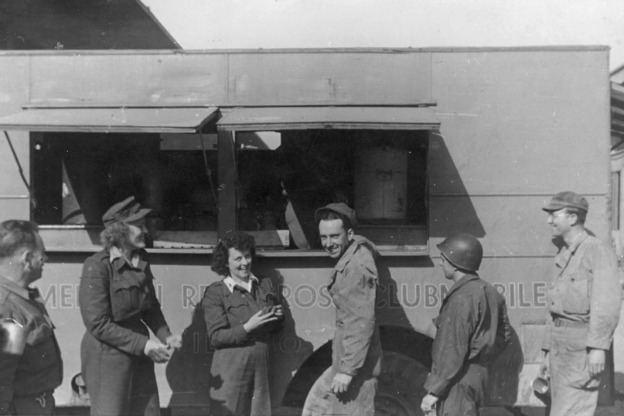
Emily Kimbrough’s literary success launched her popularity on the lecture circuit. She recounted her misadventures on trains and at women’s clubs in humorous columns in The New Yorker, in which she frequently referred to her Muncie roots and Hoosier world-view.
Long before the Witness Protection Program, a Pennsylvania native found herself relocated in Indiana, living under an assumed identity.
Not the tag-line for a crime drama, but the real-life Revolutionary War story of Frances Slocum.
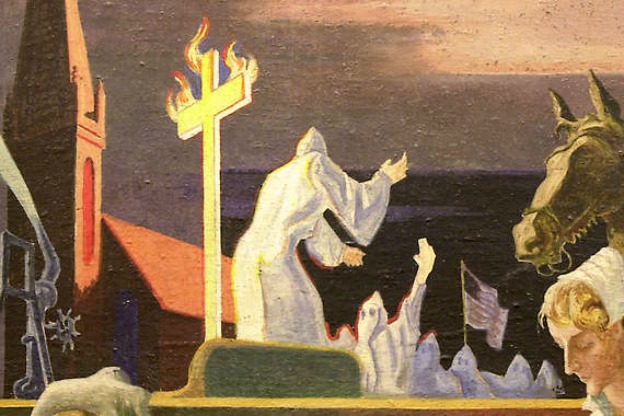
It’s well established that politics in early twentieth-century Indianapolis was dominated by the Ku Klux Klan. At the same time, however, significant foundations were being laid for the civil rights movement. Even before the founding of the NAACP, an Indianapolis institution came to serve as a crucible for integration.
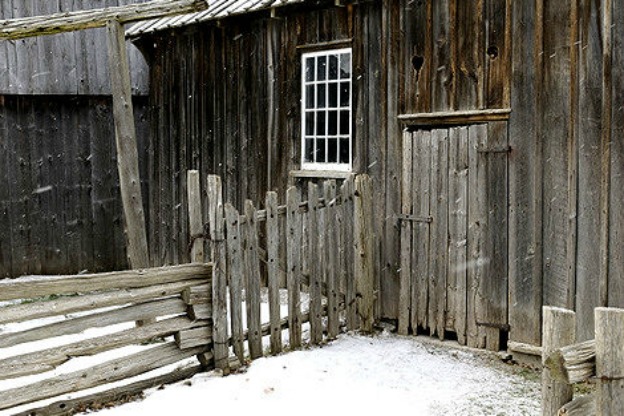
Despite a constitutional ban on black immigration into Indiana after 1851, Union Township in St. Joseph County, was the destination for a number of free blacks from Virginia and the Carolinas. The historical record of the African-American settlement at Union Township contradicts the image of life under state-sanctioned segregation.
When Indiana became part of the United States, the territory came under the governance of the Ordinance of 1787, whose sixth article outlawed slavery. With no cheap labor, however, many in the territory thought slavery necessary.
Dependent on transfusions of blood-clotting factor to live a normal life, at the age of 13 Kokomo native Ryan White became ill with pneumonia after a contaminated transfusion. During a partial-lung removal, White was diagnosed with AIDS, and given six months to live.
Instead, White recovered from pneumonia, and tried to re-enroll in school.
Now known as the Indianapolis International Airport, the facility once went by a different name. From 1944 to 1976, it was known as Weir Cook Municipal Airport, in honor of a WW1 flying legend. When a new passenger terminal was completed in 2008, the Veterans Coalition of Indiana demanded that the fighter pilot’s name be restored.
Nestled within Lagrange County, Shipshewana, Indiana is the third largest Amish and Mennonite community in the United States. Attracted by the promise of inexpensive property, early 19th-century Amish settled lands acquired as part of the Louisiana Purchase, assembling a small town only a few miles south of where the Potawatomi had been.
Adapting L’Enfant’s scheme for Washington, Alexander Ralston planned Indianapolis as a city block one square mile in area with a circle at its center, from which four diagonal roads extended radially outward.