






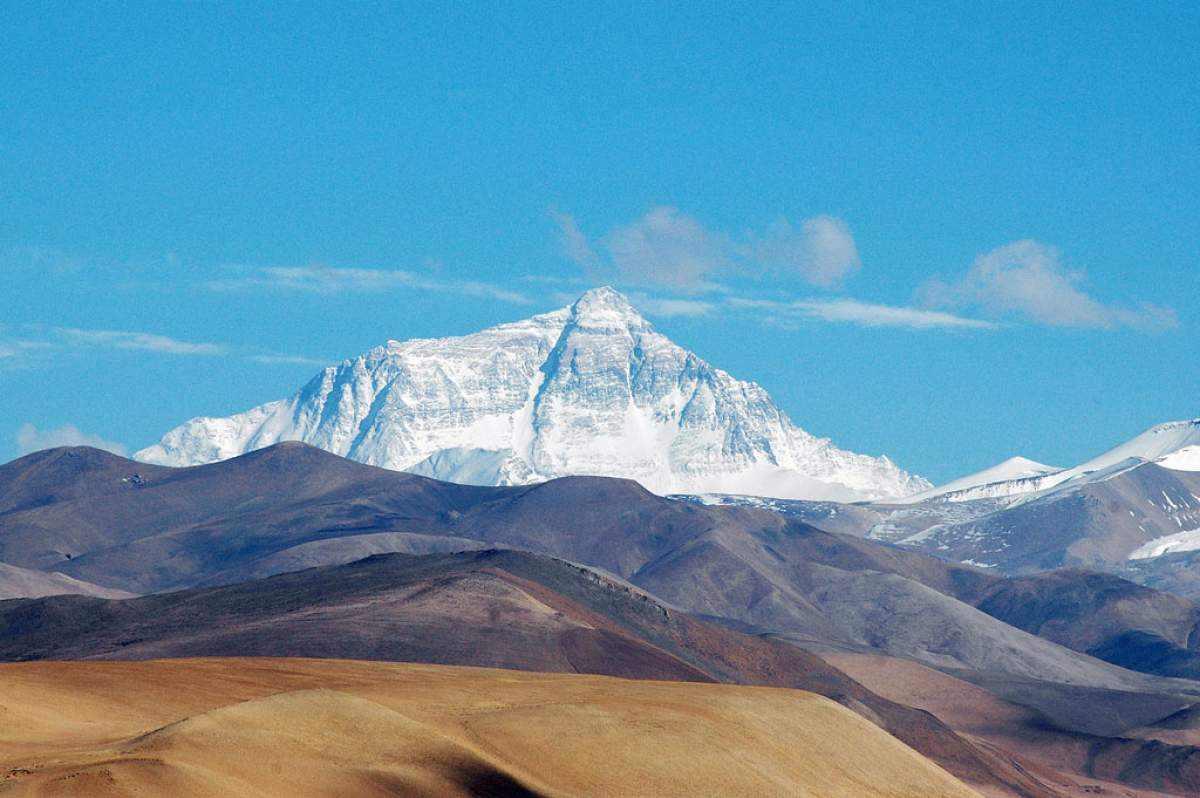
Planning on climbing Mount Everest? You might want to plan to be gasping for air.
We live at the bottom of an ocean of air. The higher up to you go, the less air there is to press down on you, which also means that there is less oxygen per unit of volume.
Did you know that if Mount Everest were located in Alaska, you wouldn't be able to reach the summit breathing natural air?
As the air gets warmer, the molecules in it spread out and make the atmosphere deeper. In a cold place like Alaska, the molecules wouldn't spread out as much. The atmosphere is more dense near the surface and less dense higher up.
What's more, the way the earth rotates means there is less air over the poles to begin with. The same principle that causes water to move away from the center of a bowl that's spinning on its axis and creep up the sides, causes the air on Earth to move away from the poles and concentrate around the equator.
When you climb a mountain located at a higher latitude, you run out of air sooner.